Guyana could earn more than US$57M annually in carbon credits as the international community seeks to step up the preservation of rainforests as a means of responding to worsening global environmental conditions, according to a recent World Wildlife Fund report released by its secretariat in Georgetown. And according to the report neighbouring Suriname could earn more than three times that amount in carbon credits in view of its larger areas of untouched forest.
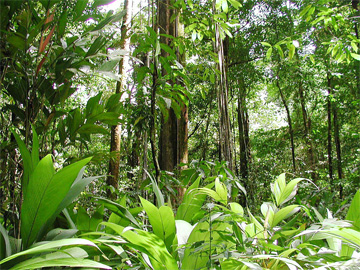
According to the report – which suggests that the estimate of potential carbon credit earnings by the two countries is conservative – both Guyana and Suriname possess considerable amounts of standing forests “which are a significant store of carbon and as such stand to gain from those who would purchase carbon credits for standing forests with significant carbon storage.” However, the report points out that the international market for carbon credits is “at a juvenile stage” since international experts are still gathering scientific evidence and formulating frameworks and protocols to support a structure for trade in carbon credits.
The term ‘carbon credits’ describes a regime of payments by countries, predominantly rich, industrialized countries, to others to retain standing forests to absorb or prevent the release of carbon generated by industrial activity into the atmosphere. “Purchasing these carbon offsets or carbon credits is now being considered by a growing number of companies and countries in order to compensate for their own emissions to reduce their own carbon footprints,” the report says.
According to the WWF report the global market for carbon has exceeded US$100B despite the global financial crisis. “In 2009 the market is expected to be expanded even further driven by tighter targets in Europe, higher carbon prices and increased maturing.”
Guyana’s President Bharrat Jagdeo has advocated the application of carbon credits as a mechanism for preserving standing forests in developing countries without negatively affecting development in poor countries. According to the report the move by Guyana to commit its rainforests to the global storehouse of carbon offsets “is possibly one of the reasons why Guyana was chosen to be one of thirteen countries to receive assistance in capacity development in carbon credits.”

According to the report developing a carbon credit capacity will ultimately depend on the capacity of forest countries to protect their environmental treasure troves from indiscriminate harvesting.
Managing carbon emissions is one of the fastest growing financial services in the United Kingdom and according to the WWF report, banking sources in London assert that “carbon will be the world’s biggest commodity market and it could become the world’s biggest market overall.”