Remarks by Major General (retd) Joseph G Singh at the commemoration of the 23rd Death Anniversary of President LFS Burnham, OE, SC, Wednesday, August 06, 2008

- Major General (retd) Joseph G Singh
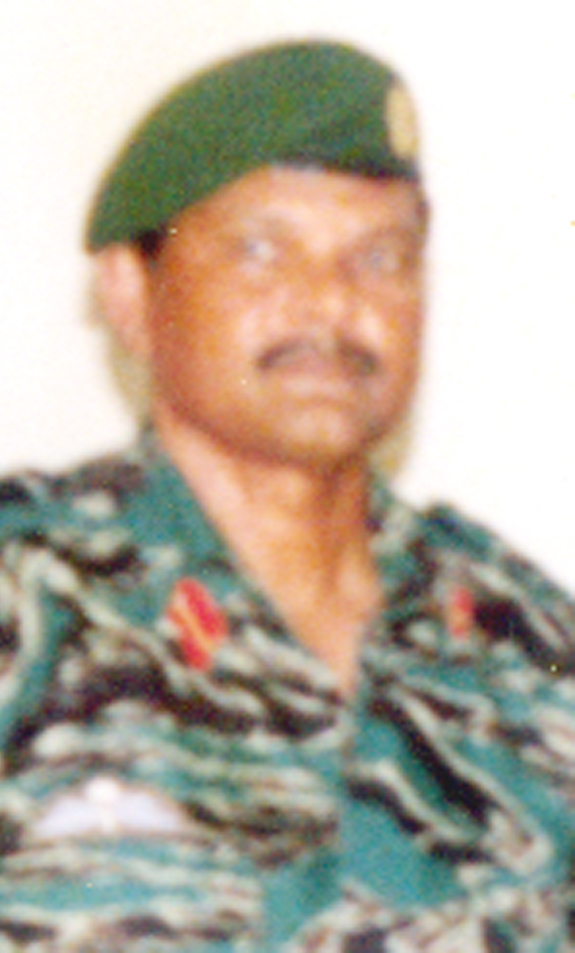
Chairperson, Ms Genevieve Allen, National Secretary, National Congress of Women, Leader of the Opposition and of the PNCR, Mrs Corbin, General Secretary PNCR, Chairman PSC, Distinguished Invitees and particularly members of the Late President’s family-Kamana, President Burnham’s close colleagues and supporters, I am honoured to have been invited to give some reflections in keeping with the chosen theme for the observance of the 23rd death anniversary of President Linden Forbes Sampson Burnham, OE, SC. “Guyana National Service, Burnham’s Vision-35 years after”. I do so in my capacity as a former Director General of the Guyana National Service from 1981 to 1990 – half of the life of the GNS which was in existence from 1974 to 1992.
The first Director General,Major General (retd) Norman McLean, having been seconded from the Guyana Police Force served from 1974 to 1979 and he was succeeded by his deputy, Colonel Desmond Roberts who served until 1981. I was asked to take over command from him for an initial period of two years. Those 2 years were extended to 4 years and when President Burnham died, his successor President Hugh Desmond Hoyte asked that I remain with the Guyana National Service. I demitted the Office of Director General when I was assigned to the Office of Chief of Staff of the Guyana Defence Force in 1990.
My 9 years (1981-1990) in command of the GNS were some of the most fulfilling periods of my career. I was given a free hand by President Burnham to make whatever changes were necessary to revitalize the service, to reorganize and redirect its efforts in pursuit of its mandate.
I took over command at a time when financial allocations were already scarce and when there were great challenges in the political, socio-economic and security environment of Guyana.

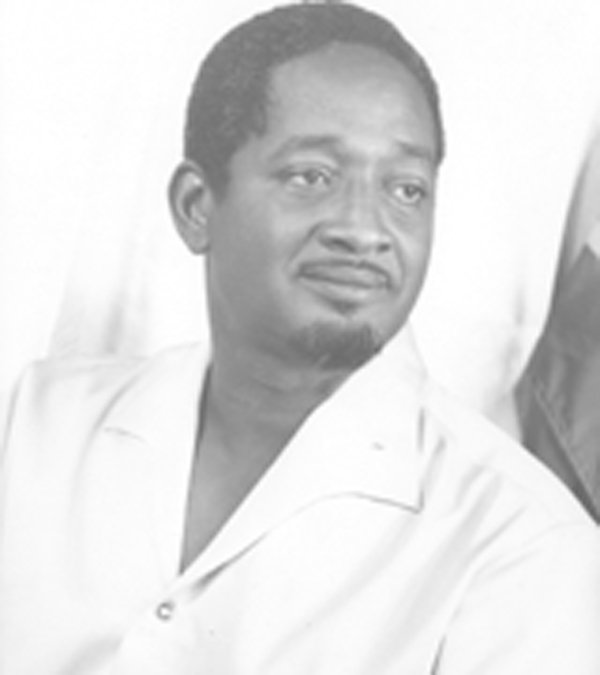
- Former President Linden Forbes Sampson Burnham
There was constructive as well as destructive criticism of the GNS: from objections to the strong military component of the initial 2 weeks or 3 months basic training; the obligatory nature of the University of Guyana student pioneer 2 months or 12 months programmes; of stress in the interpersonal relations between staff and pioneers; of the productivity and viability of the enterprises managed by the GNS-large scale mechanized agricultural activities at Kimbia; quarrying at Itabu and Teperu; wood products at Konawaruk; garment-making and artisan skills training at Tumatumari; printing and publishing at the Industrial Site; gold-mining in the Puruni and Potaro; of the efficiency of food self-sufficiency activities at all training centres including Kimbia in the Berbice River, Koriri in the Canje river, Papaya , Port Kaituma and Arakaka in the North West District, and of the effectiveness of the career guidance, counseling and placement methodology for graduates from the 18 months pioneer military and vocational training programmes. There were concerns expressed as to the impact of the psycho-social, remedial and vocational education programmes on the juveniles remanded for 2 to 3 years at the New Opportunity Corps at Onderneeming; and of the involvement of schools in the Young Brigade and National Cadet Corps programmes and in weekend camping activities at Camp Cocos, Hope Estate.
These criticisms had to be taken seriously by the Directorate of the GNS and the lessons learnt used as a platform to initiate a transformational strategy in reshaping and retooling were necessary in order to chart the way forward.

- Acknowledging the National Service?

Implicit in the strategy was the need to achieve the buy-in of all sectors of the society to evolve a truly national institution as opposed to what some saw myopically, as a third force along with the Army and People’s Militia, to militarise the society and to exercise power and control for political purposes.
Those commentators and political analysts other than those with leanings towards the Burnham administration, who have written about the Guyana National Service, have tended in the main to place more emphasis on the military, drill square bashing and the privations experienced by student pioneers away from the creature comforts of home. Others have based their interpretations on anecdotal information without the benefit of personal involvement and in an abstract setting devoid of the dynamics of pioneering, adventure, and discovery of hidden reserves of physical stamina and mental resolve among those who stayed the course.
It is also understandable that some hearing my reflections may consider that this is a biased account because of my relationship with the service for 9 of its 18 years of existence.
I do believe however, in that Vision of President Burnham as outlined in the 1973 State Paper of the GNS-promoting the concept of the new Guyana Man and Woman, oriented towards their role in nation-building, equipped with the appropriate skills, fired with pioneering zeal and enthusiasm, working collaboratively in a spirit of mutual respect with persons of all ethnicities, religious and cultural affiliations, carving out viable settlements away from the coast, developing the lines of communication and infrastructure to facilitate access, courageously defending our territory against the would be invader, supporting our hinterland communities with basic services, and developing centres of enlightenment that would-be catalysts for broad based national development. In my opinion, such a Vision cannot be faulted in the context of the national, regional and global environment at that time. I would also be bold enough to posit that such a Vision has relevance today… 35 years later.
Yes, there were weaknesses and limitations, as in any extraordinary initiative which is charting new pathways to development. In any objective analysis of the impact of the GNS, what we must seek to do, rather than throwing away the baby with the bath water, is to honestly and transparently engage in broad based consultations that draw from the experiences of our National Service, and its predecessors- the Guyana Youth Corps at based at Tumatumari and the Farm Corps based at Wauna, and with evaluation of the current programmes –the National Centre for Educational Resource Development, NCERD’s Mass Literacy Programme and Fast Track Initiative, the Youth Entrepreneurial Skills Training, YEST, the Youth Business Trust, the Work Study Programmes and the Reintegration of Juvenile Offenders into Society project, identify those models and those lessons which will be helpful to us in a national consensus approach to problem solving, as we seek to grapple with the multiplicity of challenges facing us our 42nd years as an independent Nation and 38th year as a Republic.
It was with a feeling of déjà vu that I read an article written by Lennox Bernard, Head of the UWI School of Continuing Studies, and published in the Trinidad & Tobago’s Newsday paper of Sunday, June 8, 2008, on the topic ‘National Service- a growing imperative’ and I quote; “There is a growing need to consider a model of national service that would ensure that all citizens, regardless of gender and economic status, give to society their time, skills and expertise. I know the concept as presented in the late 1980s conjured up in the minds of some sectors of the T&T population, images of boot camps or of young people herded into military driven camps and one detractor went as far as suggesting that the subtle intention was to “douglarise” the population. I contend that there was insufficient clarity of purpose to appease those anxious minds. Two decades later the concept is important more than ever as we face the onslaught of a form of crass individualism, with “self” the only concern, and with “mother Trinidad and Tobago” only important for what she can give to us. There is already an abundance of greed, selfishness, laziness, lust for power and recognition, and distrust”. “Francis Fukuyama (1996) argued that with the erosion of trust in a society, social capital will wither away and die. Social capital is the glue that binds the human capital together and it provides the cultural networking that reminds us of our duty to society”.
Writing a paper for UNESCO on the topic “Cultural Policy in Guyana” (1977), Arthur James Seymour, then Director of Creative Writing in the Institute of Creative Arts of the National History and Arts Council of Guyana, (is this still in existence?) wrote: “ The main purpose of the National Service Scheme planned as a mobilization of human resources to supplement the education system, is to ensure that all Guyanese become aware of the new values of the independent society and understand the relationship between society and themselves; to provide additional training and development of skills in appropriate instances; to place emphasis on the practical approach in training and provide for the opportunity for on-the-job learning. At the same time National Service enables the government to bring under control the untapped resources of the hinterland in a planned and deliberate fashion”.
It is useful to remind that in the 1970s the platform on which national development strategy was being crafted and pursued by the Government of Forbes Burnham had a number of planks, five of which I wish to reflect on briefly:
1. Evolving a National Identity – we are all Guyanese- One People, One Nation with One Destiny. The collective observances of national religious holidays and festivals; the intellectual and cultural ferment of the first Carifesta in 1972; the inculcation of attitudes and knowledge among our youth population of the symbols of nationhood and of the history, geography and beauty of Guyana.
2. Promoting National Self Reliance – the Development Plan of 1972 crafted under the hand of a late distinguished colleague and dear friend Dr Kenneth King, was based on the objective to ‘Feed, House and Clothe the nation by 1976’.The establishment of research and development facilities under the leadership of Dr Neville Trotz, at the Institute of Science and Technology, where training in the construction of the 25 and 50 cubic metres of biogas digesters and solar driers and in the use of kaolin for manufacture of chalk, clay bricks for housing, road and bridge construction and use of natural products such as palm oil and organic dyes, were all exciting developments. The Carnegie School of Home Economics and other public and private agencies were experimenting with the processing of local rice and cassava flour, candied fruit such as the carambola, jams, jellies, wine, the canning of fish and the local pharmaceutical industry patented products such as Limacol. The design of prefab houses, the establishment of the Santa Textile Mill and the clay brick factory were serious attempts to reduce imports and develop locally produced raw materials into value added products. The bold decision to establish the GNS as an instrument for effecting the transformation from dependency to self-reliance should therefore be seen within the context of the execution of this Development Plan
3. Enhancing National Defence capability or Defence in Depth – the concept of every citizen a soldier because of the perceived designs on our territory and the relevance and cost effectiveness of adopting a posture of defence and development patterned somewhat along the lines of the kibbutz in Israel. In fact we had visits here from an Israeli adviser in the early 1960s and a visit to Israel by the then Chief of Staff of the GDF, Brigadier Clarence Price. The national service centres dispersed throughout the country bridged the divide between the coast and the interior and were catalysts and facilitators for the delivery of goods and services to hinterland communities using its land and river logistic craft and its ocean going vessel, the MV Jaimito. These centres were also available to the Defence Force as firm bases from which to launch out on operations when necessary with the augmentation and support of the military component of the GNS.
4. Expanding the National Development Infrastructure – construction of the roads, ferries, airstrips, the Itaballi-Puruni –Kurupung road to support the Upper Mazaruni Hydro-Power Site, the Self Help road which attracted hundreds of volunteers locally and from the Caribbean was being constructed from Mahdia through North Fork and the Burro Burro to connect with the Rupununi cattle trail. These along with the upgrading of trails leading to national service centres facilitated easier movement and demographic shifts based on perceived economic opportunities and the reassurance of support from the GNS centres especially medical attention, availability of fresh food supplies for purchase, and radio communication facilities.
5. Strengthening and deepening the multilateral relationships among nonaligned and friendly States. This was a strategic move on the part of Forbes Burnham to ensure international support for the inviolability of our territory as well as to share experiences in keeping with South South Cooperation. The GNS played an important role in the International Association of National Services Organisations and facilitated exchange programmes in a variety of disciplines-training, music, production, catering, appropriate technology, printing and publishing and sports.
In all of these national programmes and projects, the Guyana National Service played a pivotal role-its cultural activities that produced poets, artistes, sculptors, artists and musicians; its agricultural and other production oriented enterprises; its military training to augment in times of crisis the Defence Force; and its role in infrastructure development associated with the many hinterland-based centres. Integral to all of these was the cross-cutting theme of inculcating the discipline, physical toughness, skills competence, mental agility, socialization and teamwork to pioneer development in the intermediate savannahs and the hinterland and to give some purpose and meaning to their lives.
Colonel Desmond Roberts, my predecessor in office, said at the end of his stint in 1981:“We taught young people how to accept hard work and challenges as part of national development. We taught them to overcome the problems in their lives by imparting certain toughness and we taught them to love their country. We have managed to bring people of all races together from all parts of the country and they have a greater appreciation and love for each other having shared so many experiences together whether happy or difficult”.
Historians and the analysts will continue to pronounce on aspects of nation-building and provide their perspectives and evaluation of the leadership and policies pursued by successive administrations since independence. Ravi Dev for example on National Culture and Identity wrote: “At Independence Guyanese inherited a State but not a Nation, since the reality of their coming together ensured that they had no common culture. The challenge would be to construct a ‘unity’ of the peoples within the Guyanese State that does not seek to obliterate the diversities but is more receptive and accommodative to self conceptions-“Accommodate diversity without fostering disunity”.
As we look at where we are 35 years later, we have variations in the geopolitical, socio-economic and cultural landscape, different personalities in leadership positions, expectations shaped by the information super-highway and technological developments, attitudes influenced by rights-based advocacy, religious and cultural evolutions and revolutions, value systems fueled by rampant consumerism and the erosion of the core values enshrined in the Charter for Civil Society and its associated stable institutions, viable communities, cohesive family units, respect for law and order and for the environment in which we live.
In reflecting on the Guyana National Service: Burnham’s Vision-35 years after, there is no doubt in my mind that adherence to the same drivers of strategy in the 1970s is very much needed and indeed this being articulated in one form or another by our current leadership- perhaps under different captions:
1. Evolving a National Identity remains a challenge. Among our younger generation, knowledge of our history, geography, biodiversity, heroes and heroines seem shallow. We are lacking in a sense of commitment to Guyana, in respect for its institutions, for the sanctity of life and public property, in a feeling of pride in the symbols of nationhood. Our indiscipline and selfishness are manifested in the appalling scenes of litter in public places, in many of our schools’compounds and in the way we use our roads, in the stealing of electricity, waste of water and vandalism of our telecommunication infrastructure.
We cannot be serious about Guyana as a tourist destination if it is first impressions that will motivate tourists and tour operators to come to Guyana. Our Diaspora show a greater commitment to the Motherland than many of us who live here.
2. Promoting National Self Reliance has come full circle with the emphasis on food security “Grow More Food Campaign”, use of appropriate technology; encouraging a revival of the spirit of volunteerism. Revisiting the structure and functioning of community and village councils that are empowered to manage their resources, are aspects that hinge on the availability of cadres of trained persons equipped with the relevant leadership and skills to ensure sustainability of the various processes associated with self-reliance.
3. National Defence Our preoccupation in the 1970s with ensuring and safeguarding of our territorial integrity (which require renewed analysis and contingencies, given the substantial upgrading and
re-arming of our western neighbour’s armed forces) has been displaced by the understandable emphasis on curbing the relatively high incidence of violent crime, abuse of women and children, alcoholism, drug addiction, traffic violations and manifestations of dysfunctionalities in the society as a consequence of the trade in narcotic substances, proliferation of unlicensed weapons, money-laundering and corrupt practices.
Infusing professionalism in the security sector, coping with the continuing migration of skills, building capacity to provide trainers in most disciplines, including sports and culture and stemming the worrying decline in functional literacy among vulnerable segments of the population, are areas where an adapted form of national service can be an instrument for revival of standards, for inculcating a spirit of volunteerism akin to the Special Service Corps of the GNS, for rebuilding the social fabric of our society and for providing a safety net for those vulnerable youth who are not necessarily included in the more conventional remedial and vocational education programmes.
4. In enhancing Infra-structure for National Development, while acknowledging the several projects (bridges, hydropower, roads, D&I works) in the pipeline or being implemented, we are also factoring in the likely impacts of climate change and the fragility of our coastal defences. The paucity of skills for construction and maintenance are a worrying factor that must be addressed. Here again an adapted form of national service can be of relevance to national development.
The late President Jagan, while Leader of the Opposition in 1987, accepted my invitation to visit the NOC and said after his visit that “I am glad that efforts are being made to rehabilitate and develop the young people. We like all patriotic Guyanese would like to see our country move forward both for human dignity and economic freedom”. He followed up this visit with a request to meet with the Directorate of the GNS and during this meeting indicated his acceptance of the organization but was particularly interested in whether the service functioned within the framework of a National Plan.
Speaking at the PNC’s 13th Biennial Congress 16-18 August 2002, the late President Hugh Desmond Hoyte, SC said and I quote” Too many young people are leaving school without being able to gain employment and without skills. The reintroduction of the National Service, with the element of compulsion removed, would seem to be a desirable initiative for imparting appropriate skills and attitudes and inculcating a spirit of confidence and adventure in our young people”.
A week before he passed away, President Burnham paid his final visit to Kimbia, the birthplace of the Guyana National Service in 1974.As I drove with him touring the extensive cotton, black eye and peanut cultivations stretching away towards Kurubuku, with the families of Settlement A looking on at the convoy of vehicles, I believe he indulged in some satisfaction that the Vision of 1973 was coming into fruition- albeit slowly but surely. The evidence was before us: land that was scrub and savannah 12 years before was supporting a thriving centre populated by hundreds of staff and pioneers, a major agricultural production base with processing facilities for cotton and peanuts, a primary school, day care centre, medical centre, housing and other facilities for staff and manifesting the profile of an evolving township. I am sure that embedded in his psyche as it related to the GNS was the service’s motto: “What the mind of man can conceive and believe, he can achieve!”
In reflecting therefore on the Vision of 35 years ago, the concept that applied then to nation building and the mobilization of the energies of our youth through the instrument of national service has in my opinion an application to our present circumstances. It is therefore recommended that in our communities, regions and at the national level we look seriously and dispassionately at the lessons learnt, drawing from the experiences of those who passed through this institution and, armed with the facts, engage in dialogue and debate to evolve an adaptation of the national service as one preferred option toward resolving some of the pressing issues of our time.