By Alva Solomon in Brussels, Belgium
Over 150 officials and journalists from African, Caribbean and Pacific (ACP) countries have gathered in Brussels, Belgium for a conference that aims to bridge the gap between agriculture development in rural areas and coverage of this sector by media.
The conference, which is being held under the theme ’The Role of the media in Agricultural and Rural Development of ACP countries’, commenced on Monday with a briefing session for participants at the European Commission building at the Borschette Centre in Brussels.
The gathering is part of the Technical Centre for Agricultural and Rural Cooperation (CTA) 25th anniversary celebrations and aims to bridge the gap between agriculture development in rural areas by reaching target audiences in ACP countries via the mainstream media. Participants hail from more than 40 ACP countries.
In his remarks at the opening briefing, Ian Barber of the European Union emphasized the importance of the media in the various democracies. He said that the media acts as a watchdog and gatekeeper, ensuring that presentations by democratic governments are important to all areas of governance.
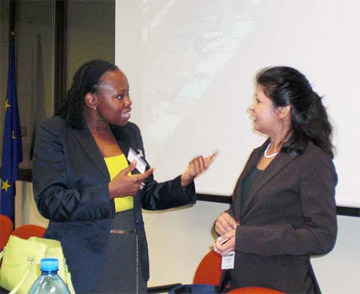
CTA director, Hansjorg Neun said that the media strengthens and collaborates within the confines of good governance. He stated that this year’s conference intends to provide answers to the question; “why do we only read about agricultural issues when there are natural disasters such as tsunamis, food crises, flooding”. Neun emphasized the need for the media to provide coverage to agricultural issues; its potential and success stories, noting that agriculture needs to be urgently boosted to feed some nine billion people worldwide by 2015.
According to the CTA head, while most governments and private entities are investing in agriculture, there is also a simultaneous need for such entities to invest in media and communication. He said that most media houses /journalists are not specialists where coverage of agricultural matters is concerned. In this light, he pointed out that the CTA has undertaken several strategies to ensure that key messages are conveyed on agricultural issues; making agriculture a better, more appealing theme where journalism is concerned.
Among the reasons highlighted for agriculture issues receiving little recognition within the mainstream media were poor infrastructure within media houses, lack of equipment, lack of education on agriculture activities on the part of journalists and poor output resulting out of the latter. Recommendations brought to the fore within the first session on Monday were the need for improved skills where journalists are concerned; improved relationships between government agencies and the media; as well as the recognition of the important roles technology plays within the field, the latter being highlighted as advanced in the Caribbean as compared to Africa and parts of the Pacific.
Trinidad and Tobago’s Dr Krishendaye Rampersad – one of several Caricom representatives attending the conference, stated that there is an urgent need for investment in training to develop the sector. She said that on the part of the agriculture sector, officials there should also think of how the agency can strengthen itself where media relations are concerned.
Ignatius Jean, the Inter-American Institute for Cooperation on Agriculture (IICA) representative based in Guyana told participants that there have been moves to improve relations between the mainstream media and the agriculture sector within Caricom. According to the former St Lucia government minister, “we love and hate the media but we can’t live without them”. He noted that it is important for partnerships to be a part of the media/agriculture development relationship. The agriculture official said the media has a symbiotic relationship with democracy, noting that it plays a powerful role as an agent for change in some societies.
Among the points raised at Monday’s session, which was moderated in part by former CNN news anchor Tumi Makgabo and Trinidad’s Dr Eugenia Springer, were the communication strategies used by various players within the mainstream media; the need for skills development of journalists; and access to more readily available information. Gender issues regarding cultural or personal issues preventing women in some societies from playing a part was also discussed.
Most participants at the conference are from the African continent while the Caribbean is represented by media houses from Jamaica, Barbados, Belize, Suriname and Haiti. The Caricom Secretariat is also participating while Guyana is represented by Stabroek News and Prime News.
The conference ends today.