Toolbox

Pain and suffering

Over the past year, the full-blown effects of the global financial and economic crisis, have led to unprecedented pain and suffering across the global economy. The damage to poor countries has been particularly severe. As a result most experts say that a full-blown crisis of human development has emerged. This is a circumstance that every reader of these columns should be concerned about.
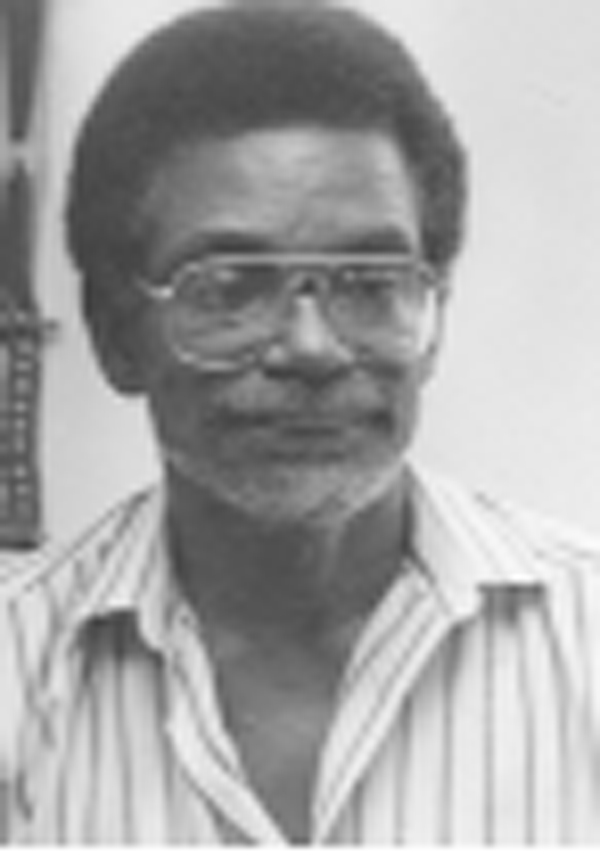
Dr Clive Thomas

Dr Clive Thomas

In Guyana the authorities have tried their best to downplay the negative impacts of the crisis on our economy. A year ago they were boasting that the economic and financial systems of Guyana were well “insulated” from traumatic global shocks. Subsequent developments, including financial contagion, shortfalls in export earnings from goods and services (tourism), the shortage of trade credit, declines in remittances inflows, official development assistance and foreign direct investment (FDI) have exposed such idle boasting. Projecting a rate of growth for the overall economy in this year’s National Budget, which is substantially in excess of that for 2008, I have already described as preposterous and likely to do more harm than good. The basic wisdom is that it never pays for authorities to exaggerate economic forecasts to the point of losing the public’s respect and confidence.

In this regard Caricom’s response has been hardly better. A year after the full-blown crisis emerged, there is still no coordinated Caricom response to it, despite the seemingly endless number of task forces that have been created to address the problem and produce solutions.
With this inaction, inertia has overtaken the process and one by one Caricom countries have reverted to the IMF and World Bank for assistance and solutions. In the same year that the United Nations Conference on the Global Financial and Economic Crisis has sought to reassert United Nations authority over the anti-development policies of these institutions, Caricom countries are lining up to seek their assistance!
Optimism!
Meanwhile, among economic analysts there is more and more talk of a possible turnaround of the US economy, beginning in the last quarter of this year. Providing there is no ‘double-dip,’ it is expected that most of 2010 will be a year of US recovery, and hopefully from this a start to global recovery as well.

Why this optimism? Several economic indicators seem to be tending in this direction. First, following on the stress tests held a few months ago, the US financial system seems to be stabilized. Financial stocks are leading the bold resurgence of stock markets, as stock market indexes achieve record highs for the crisis period. As I hinted in earlier articles, however, the European and Asian banks have not completed similar stress tests so we do not know what, if any, surprises many lie ahead of us.

Second, private housing prices have shown gains, albeit very modest, (0.5 per cent), for the first time in the crisis period. Third, while unemployment remains quite high, there was a modest decline from 9.5 per cent in June this year to 9.4 per cent in July. The numbers of jobs lost in July was about a quarter-of-a-million. A few months ago it was as high as three-quarters of a million.

Third, there has been an increase in inter-firm orders, although consumer confidence still remains weak. Much of this weakness is attributed to the slow turnaround in new jobs. In general the creation of jobs is always a lagging indicator during periods of economic recovery. Indeed, the historical data suggest that a growth in jobs does not begin to occur until the economy achieves a growth rate in the range of 2.5 to 3.0 per cent per annum.

Perhaps the most telling indicator of trends in the US economy is the behaviour of the real GDP growth rate over the past four quarters. This has displayed an unmistakeable V shape. In Q.1 the GDP fell by (-2.7 per cent). In Q2 this worsened to (-5.4 per cent). In Q3 it further worsened to (-6.7 per cent). And, by Q4 it was only (-0.1 per cent)!
The continued slide
US recovery, along with that in parts of Europe and Asia (mainly China and India) will no doubt help to stop the global slide. The truth is, however, that the poor countries of the developing world will continue to slide and suffer immensely from the negative impacts of the global crisis well after full recovery in the rich industrialised nations. This has always been the pattern. The poorest invariably fare the worst.

The question, which I hope to address starting next week in these Sunday columns is whether coming out of this unmitigated disaster for human development, any policy lessons can be drawn for Guyana and Caricom about coping with economic crises. I shall engage this issue from three basic standpoints. First, I ask the question: are there lessons to guide future fiscal and monetary responses to economic crisis?

Stimulus packages have gained worldwide currency but, as we shall come to see, these contrast starkly with the policy responses of poor countries in contending with past crises.

Second, global development agencies, as well as individual development practitioners have claimed highly successful innovations in framing and executing social safety nets and protection policies and programmes to cope with unexpected economic crises, social distress, and the situation of the poor. What are these innovations?

Third, as we have shown time and time again, the present performance of the global economy is inextricably linked to opportunities for expanding global trade. So much so, that the greatest fear in recent years has been that there would be a stampede to global protectionism. If this had happened, the global crisis would have deepened and the damage become incalculably greater. I shall explore in this regard, the general prospects for global trade and the World Trade Organisation (WTO) negotiations.

Next week I shall begin with a consideration of the first of these three questions.

Related Articles


You can follow responses to this article through its RSS feed.

Subscribe to our electronic edition or get home delivery!


Reader Comments

You can discuss this and other articles in our new community forums!


  1. Joe UNITED STATES says:

    Third world countries are caught up in a wheel within a wheel. They keep spinning their little wheels and getting nowhere. This forces them to tap into the bigger wheel- the IFI’S.

    When the British owned all these little countries they were all equivalent to little corporations. They were all profitable. The British never made a loss. Now that these countries have been given dependent independence, they are all a bust. The first country in the hemisphere that was given “independence” was Haiti, it is now the poorest followed by Guyana and that is where we are all headed.

    Now why is this? It is because the British soverignty handed over control to the European banks and the banks made mincemeat out of all of us including the USA. Of course British royalty remain major shareholders in the banks.

    Because many Western nations were economically strong it took a longer while for the illness caused by the system of usury to take effect. What is happening to the people of America today is no different from what was hapenning to third world countries all along.

    The entire world is now suffering from the effects of economic slavery.Now we are seeing the merger of state and corporate enterprise in America. That is called fascism my friends.

    All of the economic recovery indicators in the USA are false flags. They are fudging the data and continuing to cook the books. Want to put the US economy to a real test? then shut off the printing press, stop monitizing fed issued securities and stop exchanging cash for thrash with the major banks.

    The greatest test of them all is to raise interest rates. Most of the American people are still caught up in euphoria-it is a death dance-my friends, they are still being fooled, but the Chinese are not.

    You see it is the Chinese people that really matters here, because they are the ones holding one thrillion dollars in US treasury IOU’S called security notes, and they are the ones that the US is depending on along with India and Japan to continue to take these notes in exchange for goods and services because America is now the world’s most indebted nation.

    The US government took goods and services which they never paid for, cannot pay for and do not intend to pay for, they would rather go to war than pay. Third world countries never had that option.American is now the poorest most powerful nation on earth.

    That is the reason the Chinese are silently watching all this cheap money being printed and lent to the banks at zero percent interest. It makes the notes they are holding more worthless than toilet paper and they are going to start dumping it if the USA does not turn off the money spigots.

    What is actually hapenning is that America is begging the Chinese to have a little more faith, they sent Timothy Geithner to convince the Chinese that they got things under control, the Chinese laughed at him literally and it is not easy to make a Chinaman laugh, so go figure.

    On a next topic, maybe when someone presents an article on the proposed American single payer health system, I will show how this system brings the USA closer to socialism. That’s right my friends, who are living in the USA, if we continue to dance and do nothing, socialism is coming soon to a theatre near us.

    Joe.

    • jache GUYANA says:

      So what are the options for us third world countries? Where do we get money from? How can we be free of economic slavery?

    • Joe UNITED STATES says:

      Jache, Those are very good questions you ask. The solutions are very simple but the people who own and control the worlds money supply and distribution are greedy evil people who will never go along with a system of world peace and prosperity.

      It is not money they crave, they have lots of it. It is the power and control of people and world resources they crave.I have said before in earlier blogs that there is only one problem in this world and that is the way money is created and distributed to the rest of the world.

      Bloggers living in the USA and other western countries condemn the waves of crime and corruption in Guyana because they are not affected by it. They can still pay their mortgages, drive a nice car, take a vacation,buy lots of food and watch cricket on a big flat screen TV.

      The effects of the same system that plunged third world countries into cesspools of drugs, crime,corruption and social decay are about to be visited on them. Many of us will loose our jobs, 401k’s, pensions, social security, homes, cars, everything. We will be stripped down to third world status.

      It will take mass awareness and a massive human, peoples struggle across the globe to change the present system to one of fairness in trade, the distribution of wealth and the creation of peace and prosperity. Government leaders will not take us out of this mess my friends.

      They are aware of the money distribution game, they know that there will never be enough for all of us under the present system that is why they take a sizeable cut for themselves then give a small portion to be shared among the people.

      If you really want to know how can countries like Guyana survive, then you need to know how the global financial game is played. You need to do a lot of reading and research, but if that is not possible then go to Utube and plugin these names in the search field. Gerald Celente, Alan Keyes, Jeff Rense, Max Keiser,Peter Schiff, Louis Farrakhan.

      Checkout this video for an overall understanding of the forces we are up against.

      http://www.youtube.com/watch?v=Yfla9aNomrc

      Joe.

    • Joe UNITED STATES says:

      jache, here are two more names to check out on utube John Perkins, Alex Jones.

      Joe.


Leave a Reply

About Comments


The Comments section of this website is intended to provide a forum for reasoned and reasonable debate on the newspaper's content and is an extension of the newspaper and what it has become well known for over its history: accuracy, balance and fairness.

We reserve the right to edit/delete comments which contain attacks on other users, slander, coarse language and profanity, and gratuitous and incendiary references to race and ethnicity.

Curious about the little images next to each commenter's name ? Go here and sign up using the same email address you used to register for Stabroeknews.com then upload your image and confirm it.

More articles in Features, Sunday