By Godfrey Chin
Nostalgia 456
As a nostalgia buff languishing in reminisces of our wonderful yesteryears – before Independence – the current demise of our cinemas is a total shock and a tragic disappointment. Most of us were ardent movie fans, and cinemas played a major role in our maturation then. One must only wonder whether the demise of cinemas in Guyana has in some way resulted in the decay today of the current moral fibre of the nation.
Before the advent of talking pictures 1927 (Jazz Singer) and the first Academy Awards 1929, British Guiana had a prestigious movie palace called the Gaiety, at Brickdam and Camp Street, which was unfortunately destroyed by fire in 1926. By 1930 the London Cinema on Camp Street had installed sound, and another cinema was in place in New Amsterdam. The Metro on Middle Street changed its name to the Empire to accommodate the Metropole, which opened with The Merry Widow (Maurice Chevalier/Jeannette McDonald, 1934). Empire’s first movie was the Prisoner of Zenda with Ronald Coleman. I was born that year, but gleaned that ‘nylon’ subsequently from my fabulous pamphlet collection. If I had brought them up to the States when I ‘exiled,’ man, I could have retired rich.
Other cinemas in the city at that time included the Rialto (Vlissengen Road), the Olympic on Lombard Street, and the Capitol in Albouystown. The Olympic initially had no roof. Many cinema palaces were also built in the rural areas.
The forties and fifties


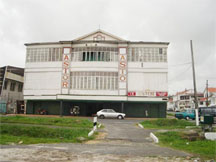
In 1940 the Correia family built the magnificent Astor on Waterloo Street, and in spite of WWII the film fare of Hollywood’s best, delighted the locals. The classic Gone with the Wind which opened in Atlanta, in December 1939, debuted at the Metropole in March 1941, and all the great classic movies such as Gunga Din, Casablanca, Citizen Kane, Robin Hood and Singing in the Rain, kept the locals up to date with the fashions, styles, norms, etc, of the outside world. Cinemas were our windows to the outer world. Even the British Council utilised 16mm shows to educate us about our then British ‘overlords.’
In the early fifties while Hollywood met the challenges of the small screen TV with wide-screen innovations, the Guyanese public received the full benefit in vogue. Plaza replaced the London in 1951, introduced wide screen (Spellbound re-issued, 1953), Dimension Fort Ti and CinemaScope King Richard and the Crusaders (Christmas 1954). Astor competed that holiday season with White Christmas in Vista Vision.
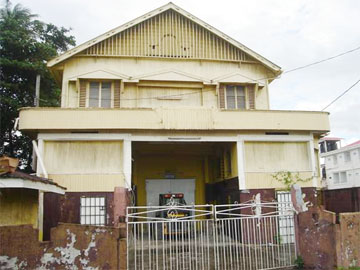
Globe which opened around 1952 with David and Bathsheba introduced the first Cinemascope The Robe with Richard Burton in Stereophonic sound. Contrary to the claim of Kittyites, Cinemascope was not first introduced in BG at the Hollywood, which opened with A Christmas Carol. The Deluxe cinema at Grove, Diamond, opened at this time, while Capitol changed its name to Rio. Rialto became Doren, which was destroyed by fire, and replaced by the Liberty.
Strand Deluxe opened in 1957 with Sayonara (Marlon Brando). De Mille’s Ten Commandments, 1956; Michael Todd’s Around the World in Eighty Days; William Wyler’s Ben Hur; Rodgers & Hammerstein’s South Pacific; and David Lean’s Bridge on the River Kwai were big hits on our silver screen.
There were more than fifty cinemas in Guyana in the sixties. When holidaying or travelling to rural areas, the cinemas such as the Crescent at McKenzie, the Atlantis in Suddie and the Globe in New Amsterdam were the highlights of my visits. Other cinemas I remember included the Novelty, Corentyne; the Radio City, Skeldon; the Strand, NA; the Starlite, Pouderyon; the Monarch, Anna Catherina; the Apollo, Rose Hall; the Palm Tree, Linden; the Tiffany, Parika; the Raj Mahal, Canje; the Mohani, Corentyne; the Vijay, Good Hope; the Gem, Enmore; the Kay Donna, BV; the Rajmahal at Peter’s Hall; the Roopmahal, Port Mourant; the Yolanda, Albion; the Mohani, No 64 and the Cameo Grove at Bath. There were others such as the Sarswatie, the Duchess, the Earlo, the Laxhmi and the Oregon. (Thanks to Peter Halder, former diplomat, who was previously a revenue collector for compiling this list.)
In August 1953, I remember Doodnauth Singh, former AG, myself, and the Harricharran brothers (all students of Central High) walking 3 miles from Novar to the Mahaicony cinema. Around March 1961, I drove to that same cinema from Georgetown, with my costume band producers to see Helen of Troy, but for hell I can’t remember the name of that cinema. Ol’ age and a senior moment setting in.
All the major film companies had distribution centres in Georgetown. I remember Twentieth Century Fox/MGM’s office next door/south of Resaul Maraj, Water Street, which was destroyed by fire, November 30, 1951. The distribution offices stocked huge volumes of promotion material, including press books, lobby cards and poster sheets for the large 32 sheet billboards, plus pictures of your favourite stars. By the mid-fifties Warner Bros, Columbia, United Artistes, Universal and Paramount opened a central distribution centre at Thomas and Church Streets, while MGM/Fox heralded the opening of Peyton Place from their new office on Church Street, west of the Globe opposite St George’s School. A series of road signs displayed the yardage distance to Peyton Place being released at Globe.
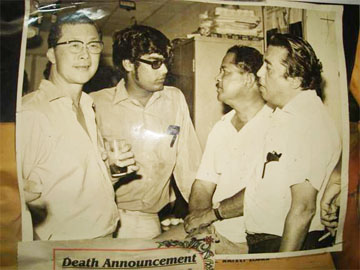
Former cinema magnates – Andrew James, H Teelucksingh, Ken Veerasammy and Pius Gomes
In the fifties, while Guyanese became more politically conscious with the early struggles of the PPP to improve local labour conditions, and our social/cultural heritage expanded, Hollywood produced many films that reflected our struggles for liberation from colonial bonds. These included Intruder in the Dust, Mark of the Hawk, Razor’s Edge, Snake Pit – The Grapes of Wrath, Blue Jeans, Mom and Dad and Rock around the Clock. Other pictures such as The Day the Earth Stood Still, War of the Worlds, When Worlds Collide, Destination Moon and The Thing introduced us to world science, technology. etc.
Our appetite for the great literary works were whetted with Hollywood’s productions of classical literature – Great Expectations, David Copperfield, Julius Caesar, Hamlet, Wuthering Heights, Rebecca, Green Dolphin Street, Picture of Dorian Grey, Cat on a Hot Tin Roof, Long Hot Summer and Butterfield Eight.
Our musical culture was inspired with Hollywood bios (though fictionized) with the careers of George Gershwin (Rhapsody in Blue), Cole Porter (Night and Day), Jerome Kern (Till the Clouds Roll By), Frederick Chopin (Song to Remember), Gus Kahn (I’ll See You in my Dreams), Helen Morgan (Helen Morgan Story), Eddy Duchin (The Eddy Duchin Story), Fanny Brice (Funny Girl), Ruth Etting (Love me or Leave Me), Rodgers & Hart (Wordsand Music), Sigmund Romberg (Deep in my Heart), Johan Strauss Jr (Great Waltz), Glenn Miller (Glenn Miller Story), Rimsky Korsakov (Song of Scheherazade), Grieg (Song of Norway), Paganini (Magic Bow), Jane Forman (With a Song in my Heart) and Irving Berlin (Alexander’s Ragtime Band). I mention these purely to glorify our cinema experience in those days. Movies were stepping stones to our education; they broadened our experience and sharpened our ‘street smarts.’
In the fifties, while TV abroad created couch potatoes, preferring to stay home and watch Milton Berle and ‘I Love Lucy,’ the Hollywood dream factories lost monopoly ownership of their theatre distribution chains, and the major studios ceased production of popular B movies such as Tarzan Adventures, Charles Starret, Cisco Kid, Bulldog Drummond, Boston Blackie, Dead End Kids and Cliffhanger Serials, which were favourites of the locals.
The golden age of
movie-viewing
The sixties was the golden age of movie-viewing for the nation moving towards Independence 1966 and Republic 1970. Big box office hits included Lawrence of Arabia, The Graduate, Psycho, West Side Story, The Sound of Music, Butch Cassidy and the Sundance Kid, My Fair Lady, Guess Who’s Coming to Dinner and The Apartment. The Starlite Drive-In at Montrose opened by 1964 with Elvis Presley in Blue Hawaii.
The Seventies was the age of the blockbusters, starting with Airport, Jaws, Earthquake, The Godfather trilogy, Star Wars and Close Encounters of the Third Kind. The cinemas were the mecca of our entertainment; weekends and holidays were sell outs, and first-run movies would run for two or three weeks to packed houses. We ‘Sunday-dressed’ to attend the movies, which were delightful oases in our wonderful yesteryears. Indian Movies Sangam, Waqt, Khabi Khabi and Mother Earth were also favourites. The added bonuses of ‘classic doubles’ added to the box-office bonanza. In 1977 Saturday Night Fever ran for three months at the Astor, with the bonus picture changing every two weeks.
And simultaneously the debacle of the fall of the Guyana cinema began.
Decline
The seventies were the ‘banlon’ years – flour, potatos, sardines banned as the currency crunch – especially after Opec 1973 – meant a scarcity of funds for necessary imports, etc. Movies are imports, and commissions ranging from 50 to 75% of the gross revenue from releases, were required to be remitted back to the movie companies abroad, which posed lots of currency problems. From the remaining net, local government taxes had to be paid, including preview/censor cost for every new picture, with the balance remaining to pay running expenses and maintenance, etc. Repeat showings required smaller commissions, also to be remitted.
By 1975, when television was fully entrenched abroad, no attempt was made locally by government to introduce TV broadcasting to the nation. A top load VCR, with 19 inch TV for $1500, was the wish list for home entertainment, and these were the popular gifts from friends and family abroad. Many rushing to flee the country promised to supply this form of private entertainment for those who stayed to burn.
Tapes in the VCR and Betamax format were utilized to record every worthwhile programme in the US and UK, and regular shipments home were the norm. 3000 classic movies were acquired by Turner, many colourised, and with HBO, Cinemax, Showtime, Pay per View, AMC and TMC in the US featuring also first-run movies 24/7, private movie viewing became ‘household popular’ locally, with video copies.
My first mission in the States was to video-copy every worthwhile movie – every Academy Award Winner via VCR – and the library is over 800 movie gems. Of course these have since been replaced when DVDs became popular.
Private bottom house ‘Speakeasy’ movie houses for small fees became the norm, especially in the rural areas, and soon Video Rental Clubs mushroomed as video players and TVs became the local fashion. Simultaneously at least three enterprising local entrepreneurs equipped their private stations to download and transmit overseas programmes. Paid subscription was henceforth available with special programmed receiver boxes needed for rental to customers. Guyanese business enterprise at its best. (to be continued)