Chancellor (ag) Justice Carl Singh believes time limits for judicial decisions as set out in recent legislation can actually contribute to an increase in the chronic backlog of cases.
He believes a change in the judicial work ethic is what is required, for judges to adopt a more responsible attitude to timely delivery of judgments, which “perhaps could have been achieved without parliamentary intervention.
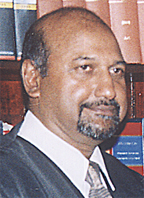
“I understand that there were good intentions behind the bill and I would be the first to admit that there is sloth in the judicial system… The bottom line is that a judge, who is saddled with the possibility of sanction for failing to meet the deadline, is not likely to proceed at bullet train pace to complete all of the cases assigned to him for adjudication,” the Chancellor stated.
In an interview with Stabroek News last week, the Chancellor recalled perusing a draft of a [similar] bill that was sent to him some months ago, and which he subsequently circulated among the judges. However, Justice Singh disclosed that he is unaware of the provisions of the bill that recently engaged the attention of the National Assembly.
The Chancellor said the judges had expressed views on the draft bill which coincided with his own, and, collectively, their comments, criticisms and observations were communicated to the Chambers of the Attorney General, who at that time was Senior Counsel Doodnauth Singh.
“We don’t know whether they were taken on board. I have not seen the bill that was recently passed,” Justice Singh added.
He said that from the newspaper reports he has read on the legislation, his conclusion was that the bill could actually contribute to an increase in the backlog. He stressed that this was his personal view.
Justice Singh said he would not be surprised if judges stopped taking files home, and since this would mean that the judicial hours of work would be utilized for adjudication and judgment writing, it could possibly lead to a slow down. “…I fervently hope that that does not happen,” the Chancellor said.
Prior the legislation, Cabinet’s draft bill, of which the Chancellor spoke, was quietly being met with resistance from the legal fraternity, and according to reports, an outright rejection of it seemed imminent. The bill had been sent to the Guyana Bar Association (GBA) by the Office of the President for comments, but the legal community had been slow in responding. Subsequently, Head of the Presidential Secretariat Dr Roger Luncheon accused the bar association of foot dragging.
Parliament unanimously passed the new bill on April 23. It sanctions judges if they fail to comply with the time limits, providing that “a case shall be tried as expeditiously as possible in an endeavour to conclude the case within such a time as the complexity and the relevant evidence necessitate.” It says that a judge who presides at the trial of a civil case shall give an oral or written decision and the concomitant reasons at the conclusion of the hearing of the case or as soon as possible; but not later than 120 days afterward.
Backlog worse
Chancellor Singh said that the backlog of cases has already increased, given that last year’s load has now accumulated. The current backlog is said to be in excess of 13,000 cases.
He underscored the importance of adequate and available judicial resources in tackling the backlog, adding that it would be humanly impossible to make a dent on the buildup given the existing complement of judges. Justice Singh added that at minimum there needs to be an appointment of part-time judges to deal with this problem.
The ongoing Justice Sector Modernization Programme will soon undertake a study to determine the exact quantum of the backlog in assessing the way forward in eliminating it, the Chancellor said, while noting that the goal is elimination and not reduction.
And in addressing concerns that some judges were not sitting full hours, he said it would be difficult to gauge a judge’s presence on the bench and in court as a mark of the judge’s work because a judge’s work was adjudication, research and writing judgments.
“… So that absence from the bench, if that is being employed as an indicator that judges are not giving a full day’s work, is something to which I am not one to subscribe… Here in the Court of Appeal we are fully involved, and I have received no complaints from the Chief Justice that judges are not giving a full day’s work,” Justice Singh said.
The Chancellor lamented though some judges had many judgments outstanding for hearings in the Court of Appeal, and they been asked to deliver those judgments. Additionally, he said, there have been several instances of judges leaving the bench with decisions outstanding and cases incomplete within recent times.
He said that the Judicial Service Commission (JSC), up until the recent legislation that seeks to impose sanctions on untimely decisions, had no policy of discipline for outstanding judgments. According to him, the current commission of which he is chairman, and commissions of the past were found wanting for not being more vigilant on this issue.
Paper committals
Legislation was enacted for paper committals to be applied in hearings in the lower court in October last year, but the Chancellor is still to receive a courtesy copy of the act.
There has already been one instance where the application of a paper committal was sought and the court ruled against the state. The case involved five young boys who were allegedly sexually abused by a businessman.
Justice Singh said he was unaware of the first application for a paper committal, and emphasized that he was disadvantaged in his response because, “a courtesy copy of the legislation was never sent to me.
“…. I understand there is similar legislation in Trinidad and that there are accompanying guidelines and regulations, if it is that our act is patterned after similar legislation in Trinidad, I would assume that regulations and guidelines might be necessary,” he stated.
Justice Singh did point out that the concerns of the judiciary can be communicated to the Attorney General and Minister of Legal Affairs, Charles Ramson, SC. But he opined that the proper approach would have been for the bar to take up the issue as a cause it could champion. He added that the bar would be perfectly entitled to write to the AG on the issue.
Sector reforms
As regards the work of the Project Executing Unit of the High Court on reforms in the sector which he heads, Justice Singh said acquisition of library material has improved under the project, and a consultancy has completed its work on a draft Judicial Service Commission (JSC) bill and accompanying regulations.
He said the bill, which will go to cabinet shortly en route to the National Assembly for approval, seeks to address jurisdiction and function while encapsulating the JSC in a statutory framework.
Justice Singh said also, that there is ongoing work on revised rules of the High Court, adding that a new Bail Act has been drawn up and that there are ongoing consultations with the bar.
“We are shortly to embark on a massive rehabilitation of Magistrate’s Court across the country, and the project is also actively considering the refurbishing of the electrical circuitry of the High Court and the Court of Appeal, as well as the provision of back-up power sources,” he disclosed.
But more importantly, the Chancellor revealed, a proposal is being drawn up, which will lead to the establishment of a Public Law court that can hear both administrative and constitutional law matters. Also, he said, the Family Court is to be launched shortly, adding that both of the courts are going to be set up as divisions of the High Court.
Sita Ramlal
With regard to the recent indictment of Supreme Court Registrar Sita Ramlal, the Chancellor said that her absence will undoubtedly have an impact on the work of the court given that the Registrar is the Chief Executive Officer of the court.
Justice Singh called the Registrar’s present situation, “unfortunate”. He said the indictment is an issue that will certainly have to be considered by the JSC.